Now that your pantry is stocked with berries, tomatoes, and green beans from your square-foot garden's bumper crop, it's time to shift our focus from preserving produce to preserving something far more fragile and precious. Our family stories, our cultural heritage, and the cherished memories often live in our favorite dishes. Because while a jar of homemade tomato sauce is a wonderful thing to pull out in January, the recipes that truly feed our spirit are the ones that transport us back in time the moment we take a bite.
The Recipes That Anchor Us
Take my grandmother's chicken and dumplings, for example. For her, this wasn't just a weeknight supper; it was a dish reserved for the "big" occasions like Christmas Eve and Easter Sunday. I can still picture her adding cumin and curry powder to her whole chicken as it simmered on the back burner. That dish didn't just feed our stomachs; it anchored us. It was the smell of belonging, the taste of celebration, and the quiet message that "You are loved."And that, dear readers, is why preserving our history through recipes matters just as much as preserving our harvest. When we write down or teach a family dish, we are doing far more than cataloging ingredients and measurements.
We are capturing a moment in time. The way a recipe is prepared often reflects the era it comes from. Perhaps it was born from Depression-era frugality, using every scrap of meat and bone for broth. Maybe it features a special ingredient from a beloved local farm that no longer exists. The recipe becomes a snapshot of your family's unique journey. Keeping voices alive: Have you ever noticed that when you make your loved one's signature dish, you can almost hear them? You can imagine their little tips, like"a pinch more salt, dear," or "don't you dare peek at the pot!" In that way, our ancestors are still with us, standing right there at the stovetop, guiding our hands.
A written recipe can sit in a box, but a made recipe is alive. When we teach our children or friends how to make our favorite dishes, we are giving them a skill, but more importantly, we are giving them a story they can one day tell their own families.
We all have that one dish. Maybe it's your grandmother's deviled eggs, your dad's famous barbecue sauce, your aunt's sweet potato pie, or the simple depression-era "Wacky Cake" that your mom made on rainy afternoons. What is the dish that transports you back in time the moment you taste it? Who was in the kitchen with you? What was the occasion?
This month, I encourage you to do three simple but powerful things to help preserve your family's "harvest" of memories. First, call or sit down with an older relative and ask them to tell you the story behind one of their favorite recipes. Secondly, write it down, messy notes and all. Don't just copy it neatly. Jot down the little margin notes: "Grandma said to add more flour if the dough is sticky" or "This is the dish Dad proposed over." Those are the details that make the recipe uniquely yours. Third, make it and share it. Cook that heritage recipe for someone you love and tell them the story while you eat. In doing so, you are not just feeding them dinner, but you're passing on a piece of your family's history. After all, the most important ingredient in any family recipe isn't the butter, the sugar, or the spices. It's the love, the history, and the memories that are stirred in with every single bite.
Now that we've filled our pantries with our garden's bounty, let's make sure we fill our recipe boxes with the stories that truly sustain us.
We want to hear from you! Reply to this email or tag us on social media with the recipe that brings back your fondest memories. We may feature your story in our next newsletter!
Featured Recipe
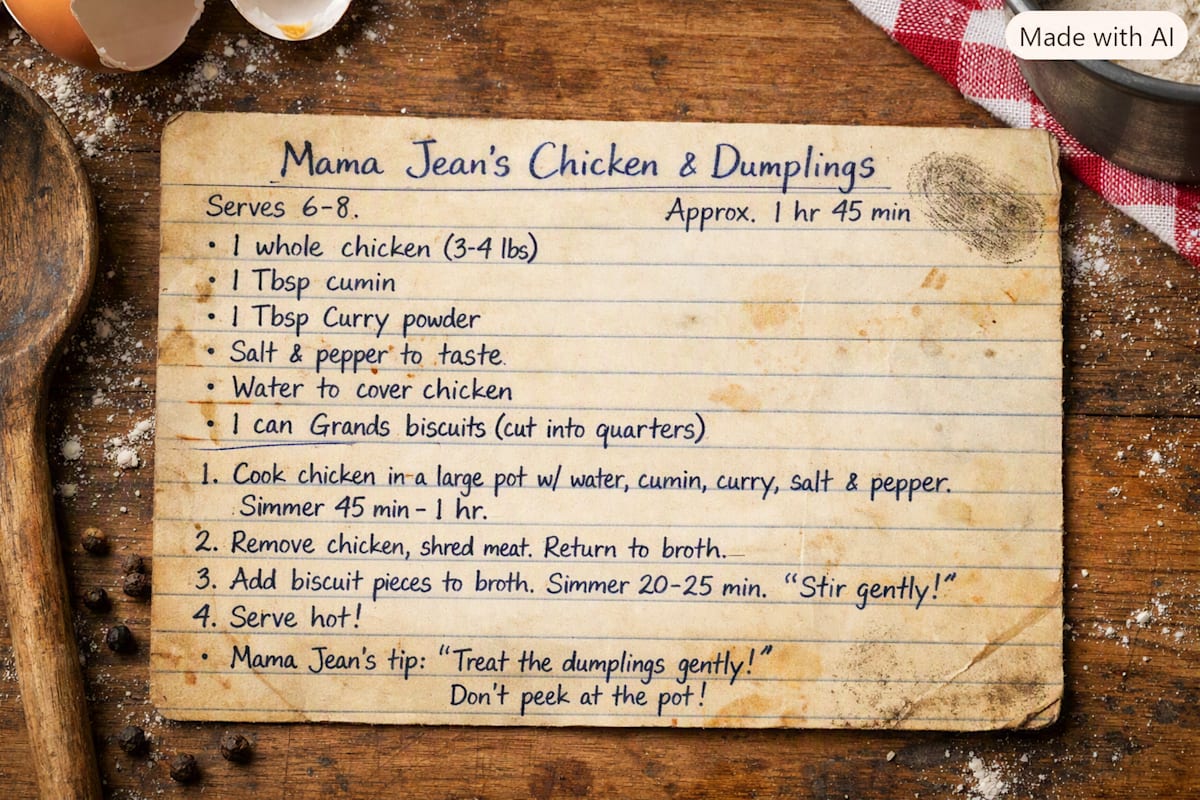
Mama Jean's Chicken and Dumplings
There are fancy chicken and dumpling recipes out there with homemade pasta and fresh herbs and hours of careful prep. And then there's Mama Jean's recipe. The secret? Cumin, Curry, Salt, Pepper, and Grands Flaky Biscuits. This is the dish she saved for Christmas Eve, Easter Sunday, and when she wanted to make you feel loved. It doesn't need to be fancy to be legendary; the dish just needs to be made.

Chicken and Dumplings Recipe
Yield: Serves 6-8
Total Time: Approximately 1 hour 45 minutes
Ingredients
For the Chicken & Broth:
- 1 whole chicken (about 3-4 pounds)
- Water (enough to cover the chicken completely in your pot)
- Salt, to taste
- Pepper, to taste
- 1 tablespoon cumin
- 1 tablespoon curry powder
For the Dumplings:
- 1 can (16.3 oz) Grands! Flaky Biscuits (the dough only)
Instructions
Step 1: Cook the Chicken
1. Place the whole chicken in a large, heavy-bottomed pot or Dutch oven.
2. Add enough water to cover the chicken entirely.
3. Season generously with salt, pepper, cumin, and curry powder.
4. Bring to a boil over high heat, then reduce the heat to low, cover, and let it simmer for about 45 minutes to 1 hour, or until the chicken is cooked through and tender enough to fall off the bone.
Mama Jean's tip: Skim any foam that rises to the top during the first few minutes of simmering to keep the broth nice and clear.
Step 2: Remove the Chicken
1. Carefully transfer the cooked chicken to a large plate or cutting board.
2. Let it cool just enough to handle.
3. When ready, shred or chop the meat, discarding the skin and bones.
4. Return the shredded chicken to the pot with the broth.
Step 3: Prepare the Dumplings
1. Open the can of Grands! Flaky Biscuits. Do not bake them.
2. Cut each biscuit into quarters using a sharp knife or kitchen shears.
3. Bring the broth in the pot back to a gentle boil.
4. Carefully drop the biscuit pieces into the simmering broth one by one, stirring gently to make sure they don't stick together.
5. Reduce the heat to a low simmer, cover the pot, and let the dumplings cook for about 20-25 minutes.
Mama Jean always said that foam bubbling over is a signal to give the pot a little peek and stir. Treat the dumplings gently by stirring with a soft hand and a wooden spoon.
Step 4: Serve
1. Ladle the chicken and dumplings into big, hearty bowls.
2. Serve with crusty bread on the side if you like, but the dumplings are so filling, you might not need it.
3. Garnish with a crack of fresh black pepper and a sprinkle of parsley for an extra touch.
Recipe Notes from Mama Jean's Kitchen
Why Grands? Mama Jean swore by the flaky biscuits because they held their texture beautifully in the broth, producing tender, pillowy dumplings every time.
The Cumin and Curry: This unexpected twist was her signature and added a warm, aromatic depth that set her chicken and dumplings apart from anyone else's. It's a small addition that makes a big difference.
Make Ahead: This recipe tastes even better the next day, once the flavors have had time to meld. Simply reheat on the stovetop.
A Special Note: There is nothing fancy about this recipe, and that's exactly what makes it perfect. It's the kind of dish that fills a kitchen with warmth, fills a table with happy people, and fills a heart with memories that last a lifetime. Every time you make it, you're not just cooking; you're keeping Mama Jean in the kitchen with you. What recipe brings back your fondest memories?