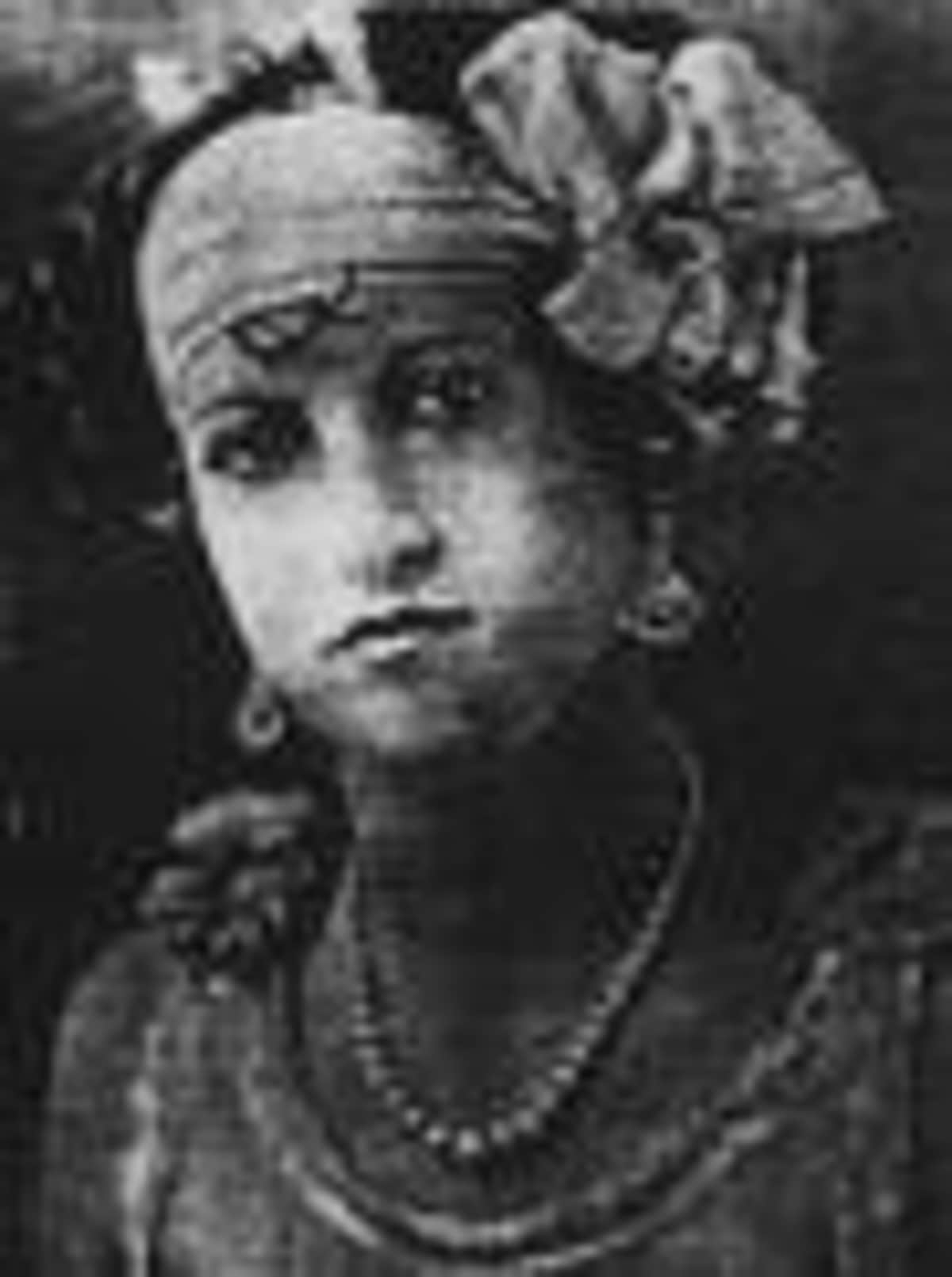
A Twisted Love Story from the Perspective of Elena Hoyos
I remember the taste of salt on the wind and the way the afternoon sun would turn the ocean into a sheet of hammered gold. I remember the music that drifted from the Cuban Club on Saturday nights, the trumpets and guitars calling to me like sirens beckoning sailors to shore. I remember dancing until my feet ached, laughing until my sides hurt, living with the fierce urgency of youth that does not yet understand how quickly it can be extinguished. I remember the weight of a red rose behind my ear, its petals soft against my skin, its fragrance mingling with the perfume my mother gave me on my eighteenth birthday.
I remember being alive.
My name is Elena Milagro de Hoyos, and I was born in 1909 in Key West, Florida, that strange and beautiful island suspended between two worlds. My childhood was filled with the sounds of Spanish and English intertwining like lovers, the smell of Cuban coffee brewing in my grandmother's kitchen, and the feeling that life stretched before me like an endless summer, full of promise and possibility.
I was beautiful. I say this not from vanity but from simple truth, for my beauty was both my blessing and my curse. Men noticed me wherever I went, at the market, at church, at the dances I loved so dearly. Their eyes would follow me, hungry and hopeful, and I learned early to navigate their attention with grace and caution. I dreamed of finding love, true love, the kind my parents shared before illness stole them from me. I dreamed of a husband who would cherish me, children who would carry my laughter into future generations, and a life filled with the simple joys that make existence worthwhile.
But fate had other plans for Elena Milagro de Hoyos.
Tuberculosis came to Key West like a thief in the night, stealing breath and life from those it touched. It took my sister first, and I watched her waste away, her body becoming a prison of coughs and fevers until death finally granted her release. Then it claimed my parents, one after the other, as if the disease could not bear to separate them even in death. I nursed them through their final days, wiping the blood from their lips, holding their hands as the light faded from their eyes, and all the while I felt the first treacherous tickle in my own lungs.
By the time I walked into the marine hospital in April of 1930, I already knew what the X-rays would reveal. The shadow on my lungs was not a surprise but a confirmation of the death sentence I had been expecting. I was twenty-one years old, and I was going to die.
It was there, in that cold and sterile room, that I first encountered the man who would haunt me beyond the grave.
Carl von Cosel was old, fifty years at least, with wild gray hair and eyes that burned with an intensity I found immediately unsettling. He introduced himself as a count, a doctor, a man of great learning and experience, but I sensed something false beneath his grandiose claims. Still, I was polite. I was always polite. My mother had raised me to treat others with kindness, even when my instincts whispered warnings I did not fully understand.
From that first meeting, he attached himself to me with a devotion that felt less like love and more like possession. He brought me medicines and equipment, promising cures that real doctors had never mentioned. He appeared at my family's home uninvited, installing machines and devices, inserting himself into our lives with a persistence that left me breathless and uneasy. He looked at me with such hunger, such desperate need, that I felt like prey beneath the gaze of a predator.
He proposed marriage to me repeatedly. Each time, I declined as gently as I could, citing my illness, my uncertain future, my unworthiness of his devotion. But the truth was simpler and more damning: I did not love him. I could never love him. There was something in his eyes that frightened me, something obsessive and unnatural that made my skin crawl even as I smiled and thanked him for his kindness.
But I was dying, and I was desperate, and he offered hope when no one else could. So I tolerated his presence, accepted his treatments, and allowed him to believe that his attentions were welcome. Perhaps I was wrong to do so. Perhaps I should have been more forceful in my rejections. But I was young and sick and terrified, and I did not have the strength to fight battles on multiple fronts.
As the months passed, my body betrayed me completely. The coughs that had once been occasional became constant, wracking my frame until I felt I would shatter into pieces. Blood spotted my handkerchiefs, then soaked them entirely. I grew thin and pale, a shadow of the vibrant woman who had once danced until dawn at the Cuban Club. The red rose I loved to wear behind my ear seemed to mock me now, its vitality a cruel reminder of everything I was losing.
Through it all, Carl was there. Always there. His presence became as constant and oppressive as the disease itself. He would sit beside my bed for hours, staring at me with those burning eyes, murmuring promises of eternal love and miraculous cures. I wanted to scream at him to leave, to give me peace, to let me die with dignity, surrounded only by those I truly loved. But the words would not come. I was too weak, too tired, too close to the end to fight anymore.
On October 25th, 1931, I felt death approaching like a cool breeze on a summer day. My family gathered around my bed, their faces blurred by the tears in my eyes and the fog that was descending over my consciousness. I tried to speak, to tell them how much I loved them, but my voice was gone, stolen by the illness that had taken everything else. The last thing I saw before darkness claimed me was the face of Carl von Cosel, hovering at the edge of my vision like a specter, his eyes gleaming with something that was not grief.
And then I was gone.
Death, I discovered, was not the end I had expected.
I found myself floating above my own body, watching as my family wept and prepared me for burial. I tried to speak to them, to comfort them, to assure them that I was at peace, but my words were wind, passing through them without recognition. I was a ghost, a spirit, a consciousness untethered from the flesh that had contained it for twenty-two years.
At first, I felt only relief. The pain was gone, the coughing and the blood and the terrible exhaustion that had plagued my final months. I was free, lighter than air, ready to drift toward whatever afterlife awaited me. I looked toward the horizon, expecting to see a light, a pathway, something to guide me to my eternal rest.
But something held me back. Something kept me anchored to the world of the living, a chain I could not see but felt wrapped around my essence like iron bands. I did not understand it then. I would come to understand it all too well.
They buried me in the Key West Cemetery, and I watched from above as they lowered my casket into the ground. My sister wept. My remaining family members clutched each other for support. And there, standing apart from the others, was Carl von Cosel, his face a mask of anguish that seemed somehow theatrical, somehow false.
He visited my grave every day.
I watched him come, rain or shine, speaking to my headstone as if I could hear him. And I could hear him; that was the terrible truth. I heard every word he spoke, every promise he made, every declaration of love that made my ghostly form recoil in horror. He spoke of destiny, of visions, of a cosmic connection between our souls that had never existed except in his deluded mind. He called me his bride, his eternal love, his reason for existence.
I screamed at him to leave me alone. I begged him to let me rest. But my voice was silenced, my protests unheard, my desperation invisible to the living world.
Two years after my death, he built a mausoleum for me. I watched the construction with growing dread, sensing that this elaborate tomb was not a tribute but a trap. When my body was exhumed and placed within those stone walls, I felt the chains around my spirit tighten. I was bound to my remains, unable to move on, unable to escape the man who had claimed ownership of my corpse.
For eighteen months, he visited me daily in that mausoleum. He would sit beside my casket, speaking of our future together, of the life we would share, of the miracle he was planning. I did not understand what he meant until the night he came with tools and determination in his eyes.
He stole my body.
I watched in horror as he wrestled my decaying remains from the mausoleum, handling my corpse with a tenderness that made my ghostly stomach turn. I followed helplessly as he transported me to his home, unable to break the invisible tether that bound me to my physical form. I was a prisoner, forced to witness everything he did, every violation he committed against the body that had once been mine.
What followed were years of unimaginable horror.
I watched as he peeled away my rotting shroud, his hands moving over my decomposed flesh with sickening intimacy. I screamed without sound as he inserted wires into my skeleton, propping up bones that had begun to collapse. I wept invisible tears as he molded wax and plaster over my face, creating a grotesque mask that he believed captured my beauty. He replaced my eyes with glass, dressed my remains in silk, and treated my corpse with oils and chemicals that filled the small house with a smell that would have made the living retch.
And through it all, he spoke to me. He told me how beautiful I was, how happy we would be together, how our love had transcended death itself. He did not hear my screams of protest, my pleas for release, my desperate prayers for someone to discover what he had done and set me free.
He slept beside my body every night.
I cannot describe the revulsion, the violation, the utter helplessness I felt as this man I had never loved, this man who had frightened me in life, claimed my corpse as his bride. I was forced to witness every moment, every touch, every whispered endearment. I was trapped in a nightmare from which there was no waking.
Seven years. For seven years, I endured this torment, bound to my remains, unable to escape, unable to find the peace that death should have granted me. I watched the seasons change through the windows of his home. I listened to the waves that he said serenaded our love. I existed in a state of perpetual horror, a ghost imprisoned by an obsession I had never invited and could not escape.
Sometimes I tried to make my presence known. I would focus all my energy on moving an object, on creating a sound, on anything that might alert the outside world to my plight. Occasionally, I succeeded, a door would creak, a curtain would flutter, a cold spot would form in the room. But Carl attributed these occurrences to my spirit expressing love and approval. He twisted every sign of my distress into evidence of our eternal bond.
The worst moments were when he would parade me around his home, positioning my body in chairs or propping me up at tables as if I were a living companion. He would have conversations with me, asking questions and then answering them himself in a high-pitched voice he imagined was mine. He had created a puppet, a doll, a thing to satisfy his delusions, and my ghost was forced to witness every degrading moment.
I learned to hate him. The mild unease I had felt in life transformed into a burning rage that would have consumed me if I had possessed a body capable of being consumed. I cursed him with every fiber of my being. I prayed for his death, for his capture, for anything that would end this obscene theater of false love.
And then, finally, my prayers were answered.
My sister, my brave, persistent sister, had never stopped wondering about my body. Rumors had reached her ears, whispers about the strange German count and his unusual activities. She confronted him, demanded to see where I was, and he, in his arrogance and delusion, actually showed her.
I watched my sister's face as she entered that house and saw what I had become. Horror. Revulsion. Grief. Her scream was the most beautiful sound I had ever heard, because it meant that someone finally knew. Someone would finally stop this nightmare.
The authorities came on October 5th, 1940. They seized my body, what remained of it, and arrested the man who had stolen my death from me. I watched as they carried my remains out of that house of horrors, and for the first time in nearly a decade, I felt a loosening of the chains that bound me.
But my ordeal was not yet over.
They put me on display. Eight thousand five hundred people came to gawk at my reconstructed corpse, to satisfy their morbid curiosity, to turn my tragedy into entertainment. They cancelled school so children could see me. Children. I had become a carnival attraction, a curiosity, a thing to be stared at and discussed and remembered not as Elena Milagro de Hoyos, the young woman who loved to dance, but as the corpse bride of a madman.
I watched Carl at his hearing, listened to him proclaim his love for me, heard the sympathy in some voices as they spoke of his "devotion." They romanticized what he had done to me. They saw a love story where there was only obsession, only violation, only the systematic destruction of everything I had been. They charged him with nothing more than destroying a tomb, and even that charge was dismissed.
He walked free.
But at least they hid me from him. My body was secretly reburied in the Key West Cemetery, in a location known only to a few trusted souls. For the first time since my death, I felt the chains around my spirit begin to loosen. I was still bound to this place, still unable to move on entirely, but I was no longer imprisoned in his house, no longer forced to endure his touch and his voice and his delusions.
When Carl left Key West in 1941, I felt a surge of something like joy. And when the explosion destroyed the mausoleum he had built for me, I watched the stones crumble with fierce satisfaction. He would never cage me again.
I am still here, in the Key West Cemetery, wandering among the graves of over one hundred thousand souls. I am not alone; there are other spirits here, other restless dead who cannot find their way to peace. We exist in a twilight world, seen only in glimpses by the living, our voices heard only as whispers on the wind.
Sometimes visitors to the cemetery catch the scent of roses and look around, puzzled, searching for the source. That is me, or what remains of me, the ghost of a young woman who only wanted to live and love and dance until her feet ached. Sometimes they see a figure in the shadows, a dark-haired woman with sad eyes, and they feel a chill that has nothing to do with the temperature.
I do not mean to frighten them. I only want to be remembered, not as the corpse bride, not as a curiosity, not as the object of a madman's obsession, but as Elena. Elena, who wore red roses in her hair. Elena, who laughed at the Cuban Club. Elena, who died too young and found no peace in death.
I am still waiting for that peace. I am still hoping that someday the chains will break completely and I will finally be free to move on, to find whatever lies beyond this shadowy existence. I am still here, in Key West Cemetery, my grave unmarked, my resting place unknown to all but a few.
If you visit this place and feel a sudden sadness, a weight of grief that seems to come from nowhere, know that you are feeling my presence. And if you have compassion in your heart, say a prayer for Elena Milagro de Hoyos.
Pray that I finally find rest.
Pray that I am finally free.
Pray that someone remembers the woman I was, not the thing I became in the hands of a man who called his obsession love.
I was not his bride. I was never his bride. I was Elena, and I deserved better than this. I deserved to dance until dawn, to find true love, to grow old surrounded by children and grandchildren. I deserved a life, and when that was taken from me, I deserved a death marked by dignity and peace.
Instead, I got Carl von Cosel.
And I am still paying the price for his love, even now, even here, even in death.
The roses still bloom in Key West. The music still plays at the clubs where I once danced. The sun still turns the ocean to gold in the afternoon light. And I am still here, watching, waiting, remembering what it felt like to be alive.
Perhaps someday I will know peace. Perhaps someday I will finally be free.
Until then, I remain Elena Milagro de Hoyos, the stolen rose of Key West, forever twenty-two, forever trapped between worlds, forever haunted by the man who would not let me rest.
This is my story. This is my truth. This is the voice I was never allowed to have in life or in death.
Remember me.